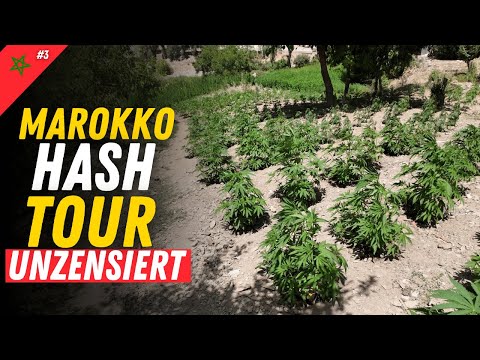
Morocco Cannabis Farmers Ketama: Daily Life Growing. The documentary footage that makes up this record offers something rarer than a production explainer – it shows the human texture of cannabis farming in the Rif Mountains: the physical labour, the seasonal rhythms, the economic calculus, and the cultural weight of cultivating a plant that has supported families in this region for generations.
Ketama — Heart of Moroccan Cannabis
Ketama sits in the central Rif Mountains at approximately 1,600 metres elevation. The EMCDDA estimates Morocco's cannabis cultivation zone at over 47,000 hectares in peak years, and Ketama is the historical and geographic heart of that zone. Understanding Ketama's daily agricultural reality requires moving past abstraction to the specific: individual farms, family labour, and decisions made season by season.
The farmers documented here are part of a community where cannabis cultivation is not a counter-cultural choice but an agricultural inheritance. Families in the Ketama region have cultivated the Beldia landrace – the indigenous cannabis variety of the Rif – for as long as collective memory extends. The choice to continue farming is economic necessity combined with the deep familiarity that comes from growing up on a farm where your grandparents' tools are still in the shed.
Geographic Context: Rif Mountains
The Rif range's terrain makes mechanised, large-scale monoculture agriculture impossible across most of the cannabis-growing zone. Steep hillsides with limited flat ground mean cultivation is terrace-based: narrow platforms cut into the slope, maintained by hand, irrigated by gravity-fed channels drawn from the mountains' snowmelt and spring rainfall. These terraces can be seen throughout the documentary footage – some of them, by the farmer's account, laid down by his great-grandfather.
The climate is Mediterranean-continental: hot, dry summers extending the growing and ripening period, cold winters with significant snowfall at higher elevations, and a spring rainy season that fills the irrigation channels and initiates the growing cycle.
Traditional Hash Production in Daily Practice
The production chain for Ketama hashish is described in detail in the companion documentary on the hash farm traditional production. This daily-life focused documentary complements that technical record with the human dimension: how production fits into the agricultural calendar, which family members perform which tasks, and what the social structure of a cannabis farming community actually looks like from the inside.
The Dry-Sift Process in Daily Practice
Sieving – the foundational step in Moroccan hash production – unfolds over weeks in autumn, typically October and November, after the harvest is dried and before winter rains make outdoor work impractical. The documentary shows the rhythm of this work: mornings are for sieving, when temperatures are cool and trichomes are firm; afternoons are for pressing and packaging the previous day's sift.
Women in the farming household perform a significant proportion of the sieving work. The documentary's footage of a mother and daughter working alongside each other at the traditional sieves – the daughter's movements already fluent at what appears to be early adolescence – communicates something that statistics about cannabis production cannot: the intergenerational transmission of agricultural skill in a community where the crop itself is illegal but the farming knowledge is a family heirloom.
Pressing Methods
Pressing transforms loose sift into stable, transportable hashish. The documentary shows pressing happening in the evenings, inside the farmhouse, using a combination of manual pressure and gentle heat from a wood stove. Traditional wooden presses are supplemented by heated hands and cloth-wrapped pressure for the final shaping and sealing of blocks.
The farmer demonstrates the quality check performed before pressing: a small amount of sift is heated briefly between two fingers. The way the resin responds – how it melts, how sticky it becomes, how the aroma opens up – tells him whether the pressing temperature and duration need adjustment. This is empirical knowledge, developed without instruments, communicated through demonstration.
Strains & Genetics: Moroccan Beldia and Kif Varieties
The cannabis genetics that these farmers cultivate are a living archive of landrace diversity. The Beldia is not a single uniform variety; over centuries of selection under the Rif's conditions, multiple distinct phenotypes have emerged. Farmers maintain their own seed stocks, selecting seed-parent plants based on criteria that overlap significantly with what modern breeders prioritise: resin density, plant structure, resistance to local pathogens, and aroma profile.
Modern genetics have entered the Ketama region through seed distributors, primarily from Spanish and Dutch sources. Some farmers have experimented with indica-dominant varieties to increase yield and resin density. The older generation tends to be sceptical: the Beldia, they argue, produces a hash with a specific character that modern crosses cannot replicate. The younger generation is more pragmatic: yields matter, and higher-resin modern varieties produce more sellable product per hectare. This generational tension is one of the documentary's more subtle but significant threads.
Daily Life of a Hash Farmer
The documentary's sustained observation of daily life in the farming community reveals a schedule structured entirely around the agricultural calendar. There is no neat separation of work and home; the farm is the home, the family is the workforce, and the rhythm of the seasons determines everything.
Harvest Season in Detail
The harvest period – typically September through mid-October – is the year's most intensive labour phase. The entire family mobilises; extended family members from the lowland cities return for the harvest as an annual ritual that is economic necessity and cultural continuity in equal measure.
Cutting happens at dawn when temperatures are cool. Plant material is carried to the drying structures on foot – no vehicle access on most of the steep terrace farms – in loads that the documentary shows to be physically demanding. Drying structures are stone buildings with slatted walls for airflow, often generations old, their interiors fragrant with accumulated resin from decades of use.
Economics of Ketama Cannabis Farming
Farm-gate prices in Ketama are a fraction of European retail prices: a kilogram of pressed hash may yield the farmer €50–€100 at the Ketama sale point; the same kilogram arrives in European markets with a retail value ten to twenty times higher. The margin is captured almost entirely by distribution networks.
For the farming families, the income is sufficient in a context where alternatives are limited. Cannabis farming is not, for these families, an ideological stance. It is a livelihood in a marginalised region with limited options. A 2021 Moroccan law permitted licensed cannabis cultivation for medical and industrial purposes – a significant shift. Most farmers continue in the traditional unlicensed model while watching the regulatory situation develop.
Morocco vs. Other Hash Origins
To understand what Ketama produces, it helps to understand where it sits in the global hash tradition.
Hash Origins Compared: Morocco, Afghanistan & Lebanon
| Origin | Production Method | Texture | Potency | Dominant Character |
|---|---|---|---|---|
| Morocco (Ketama) | Dry-sift (mechanical sieving), hand-pressed | Soft, pliable, crumbles cleanly | Moderate–High (10–25% THC) | Earthy, spiced, hashish-classic |
| Afghanistan | Dry-sift or hand-rubbed (charas-adjacent) | Dense, dark, very hard; softens with heat | High–Very High (15–35% THC) | Fuel, rubber, deep resin |
| Lebanon | Dry-sift, pressed with heat | Brittle, golden-brown, distinct snap | Moderate (8–18% THC) | Floral, sweet, lighter than Afghan |
Moroccan hash's position in European cannabis culture is the product of geography – North Africa's proximity to Southern Europe – and of decades of established distribution networks. For scholarly documentation, the EMCDDA Morocco Drug Report provides the most reliable publicly available data. Leafly's hashish guide offers accessible cultural and consumer context.